
Class A fire rating starts with the right underlayment, not just the metal.
A metal roof's overall fire classification depends on the complete assembly — panel, underlayment, and substrate together — not the metal surface alone.
Overview
A Class A fire rating — the highest classification under ASTM E108 and UL 790 — is achieved by the complete roof assembly, not the metal panel in isolation. The underlayment, insulation, and deck all factor into the tested assembly's rating, which is why underlayment selection is a fire-safety decision as much as a moisture-management one.
High-Temperature Underlayment for Metal Roofs
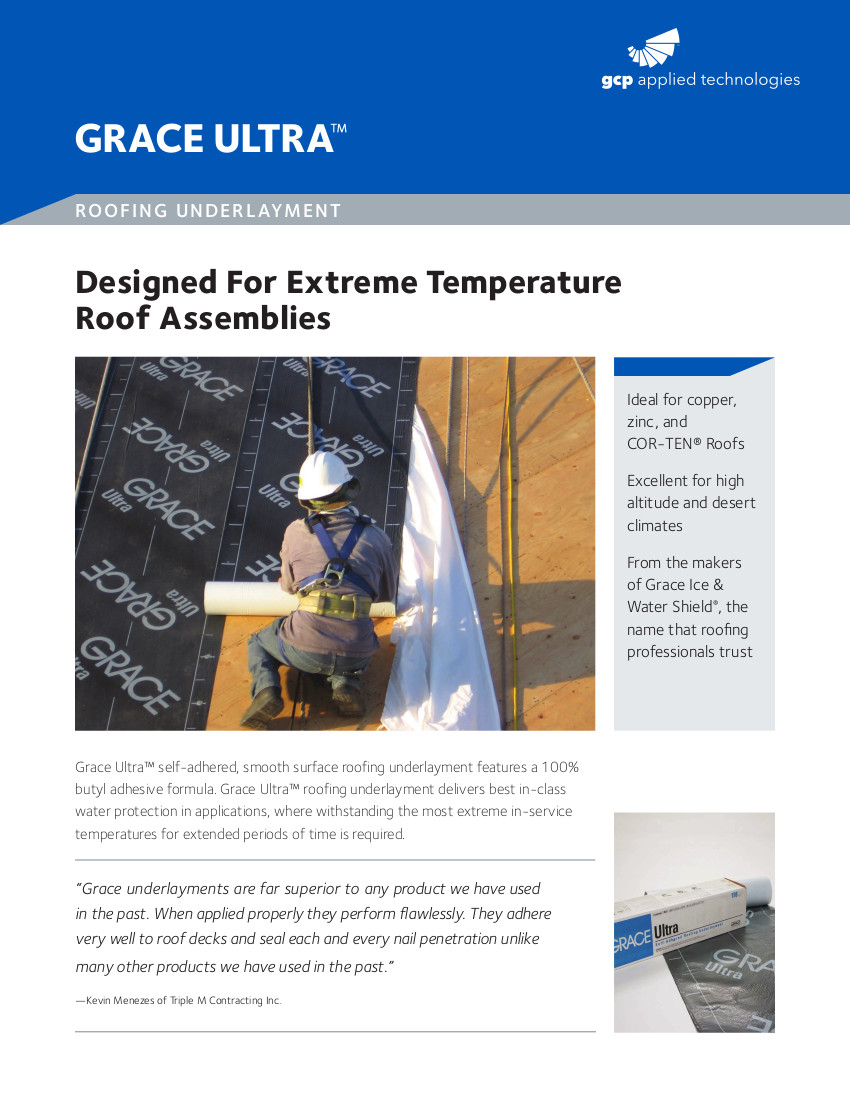
Metal roofing surfaces, particularly darker colors and materials like copper, zinc, and Corten, can reach significantly higher surface temperatures in direct sun than asphalt shingle roofing. Standard roofing underlayments aren't always rated for this exposure. Self-adhered underlayments formulated specifically for high-temperature metal roof applications — rated to withstand sustained temperatures around 300°F — are recommended for copper, zinc, and Corten installations to prevent underlayment degradation over the life of the roof.
Assembly Specification
We coordinate underlayment selection with your specified metal, color, and local fire code requirements as part of the overall roof system spec. Contact us with your project's fire rating requirements and roofing material selection and we'll confirm a compliant underlayment assembly.